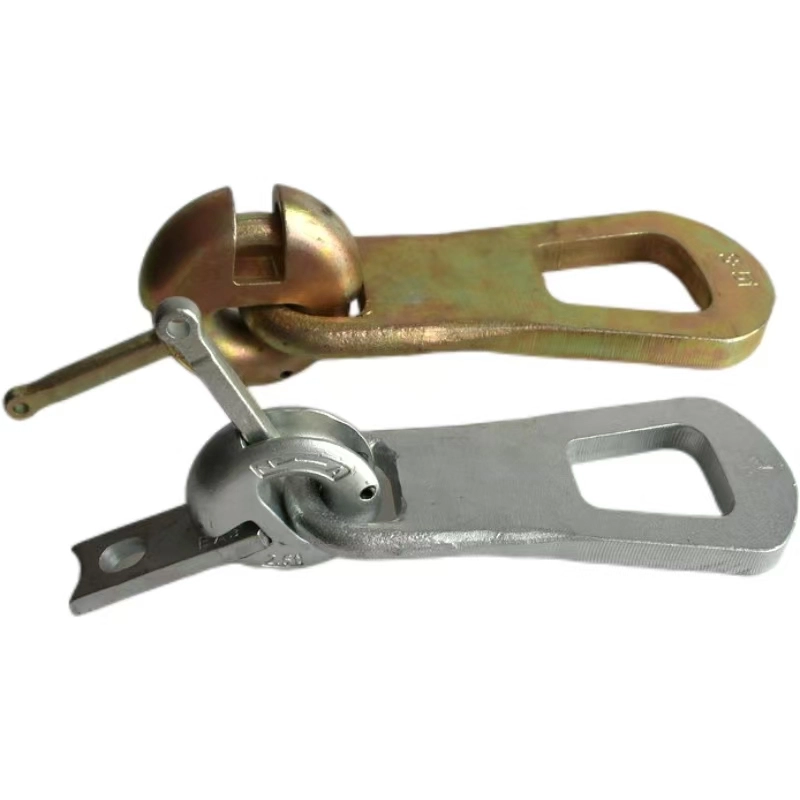
Safety in lifting operations doesn’t start when the hook engages—it starts much earlier, at the stage where every piece of steel, every weld, and every inspection is verified. The reliability of concrete lifting anchors or lifting clutches depends on how well each stage of production and testing is handled. When these checks are done properly, accidents just don’t happen.
Raw Material Verification: Safety Begins at the Source
Material Certification Review
Checking material certifications makes sure that only proper and traceable metals go into production. Each batch of steel used for anchors for concrete must meet global standards such as EN 10204 3.1 or ASTM A370. These papers confirm chemical makeup, mechanical power, and heat treatment details. Without them, there’s no promise that a lifting clutch will work safely under weight.
Chemical Composition Analysis
Chemical checks play a big role in making sure raw materials match their certification info. Methods like optical emission spectroscopy (OES) or X-ray fluorescence (XRF) are often used to spot alloy parts exactly. This step stops mix-up mistakes. And it ensures resistance to rust and strength—key for lifting tools in tough building sites.
Mechanical Property Testing
Mechanical tests confirm that the steel’s power, flexibility, and shock resistance fit design needs. Usual tests include pulling strength measures, Charpy impact checks, and hardness reviews. These outcomes decide if a material can handle repeated weights without wearing out—a must for safe precast moving.
Manufacturing Process Control: Eliminating Risk During Production
Casting and Forging Control
Casting and forging are spots where many inner flaws can start if not managed well. Heat control, mold strength, and cooling speed all affect structure quality. Manufacturers keep tight process records to ensure steadiness across groups. BaoQi, a trusted manufacturer specializing in forged and cast metal components for lifting systems, keeps exact process control to remove gaps or bits that could weaken a clutch body.
Weld Zone Inspection
Welded spots often bear the biggest stress points in lifting clutches. Eye checks combined with ultrasonic or magnetic particle exams help find cracks or holes early. Ongoing training for welders also makes sure even weld depth and joining quality.
Dimensional Inspection
Size accuracy decides if parts fit right in lifting setups. Coordinate measuring machines (CMMs), calipers, and gauges are used to check tolerance fits. Even tiny shifts can cause wrong alignment during load shifts—something no builder wants on the job.
| Inspection Type | Main Purpose | Common Tools |
| Casting/Forging | Detect internal defects | Radiography, ultrasonic testing |
| Welding | Identify surface/subsurface flaws | Magnetic particle test |
| Dimensional | Verify geometry accuracy | CMMs, micrometers |
Non-Destructive Testing (NDT): Detecting Invisible Defects
Fluorescent Magnetic Particle Testing
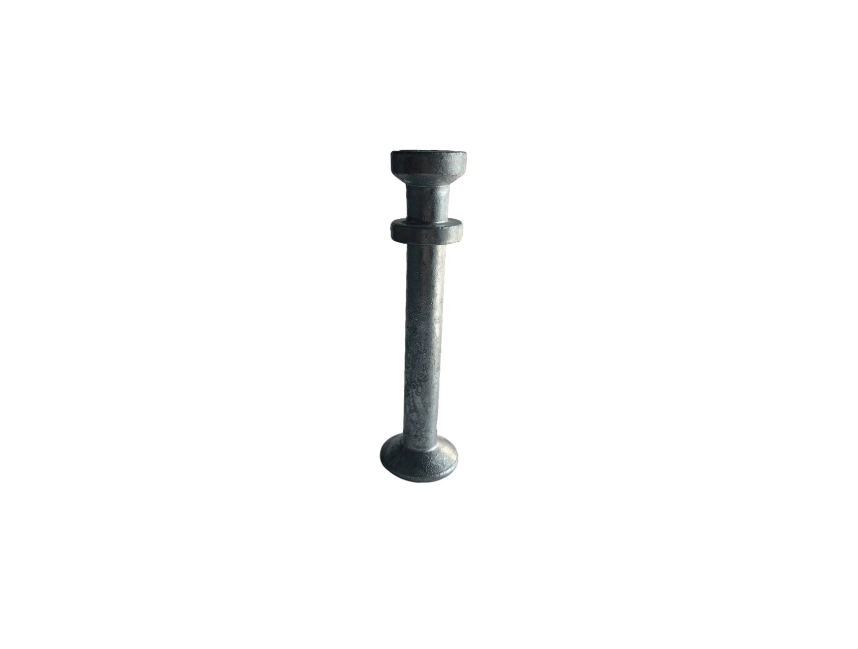
Magnetic particle testing (MT) is widely used for ferromagnetic materials like those in concrete lifting anchors. The process involves magnetizing the component and applying fluorescent particles. Any break distorts the magnetic field, and it shows flaws under UV light. It’s fast but really good for spotting cracks you can’t see otherwise.
Surface and Coating Inspection
Surface finish impacts both wear life and rust protection. Coating checks look at thickness evenness using gauges or stick tests to make sure protective layers stay whole during use or storage.
Design Validation and Destructive Testing
Ultimate Tensile Testing
Ultimate tensile tests find out how much force a clutch can take before it breaks. Samples are pulled until they fail while recording stretch and pressure data—info that’s vital for setting safe working loads.
System-Level Testing
Beyond single parts, whole lifting systems go through function checks under fake real-world setups. Engineers watch for bending, locking work, and release actions to confirm system trust before big production starts.
Proof Load Testing and Certification
Factory Proof Testing (2.0 × WLL)
Every finished lifting clutch must pass proof load testing at twice its working load limit (2 × WLL). This extra loading checks structural strength without causing lasting bends—a straight proof that safety buffers are in the design ideas.
Identification Marking and Traceability
Each component gets a unique identification mark linking it back to its test records and material batch number. Traceability ensures that any problem found later can be tracked quickly through production history.
Test Record Management and Documentation
All inspection results—from raw material certificates to final proof load data—are archived digitally for full traceability. This documentation supports audits, customer verification requests, or regulatory compliance reviews at any time.
Pre-Delivery Inspection and Release Control
Before sending products like anchors for concrete or lifting clutches, inspectors do visual checks for damage. They verify markings, confirm coating condition, and review all quality documents once more before formal release approval.
In-Service Inspection and Periodic Testing
Pre-Use Inspection
Operators should look over each clutch before use—checking pins, hooks, locking mechanisms, and labels—to spot wear or bends early.
Annual Proof Testing (1.2 × WLL)
Yearly re-testing at 1.2 times the working load limit confirms ongoing safety after long use or exposure to things like rust or hits.
Why Strict Inspection Matters
Strict inspection isn’t just paperwork—it’s stopping trouble before it starts. Each layer of checks builds trust that when a clutch lifts tons of precast concrete overhead, it will do so reliably every time.
Partner with BaoQi for Reliable Lifting Clutches
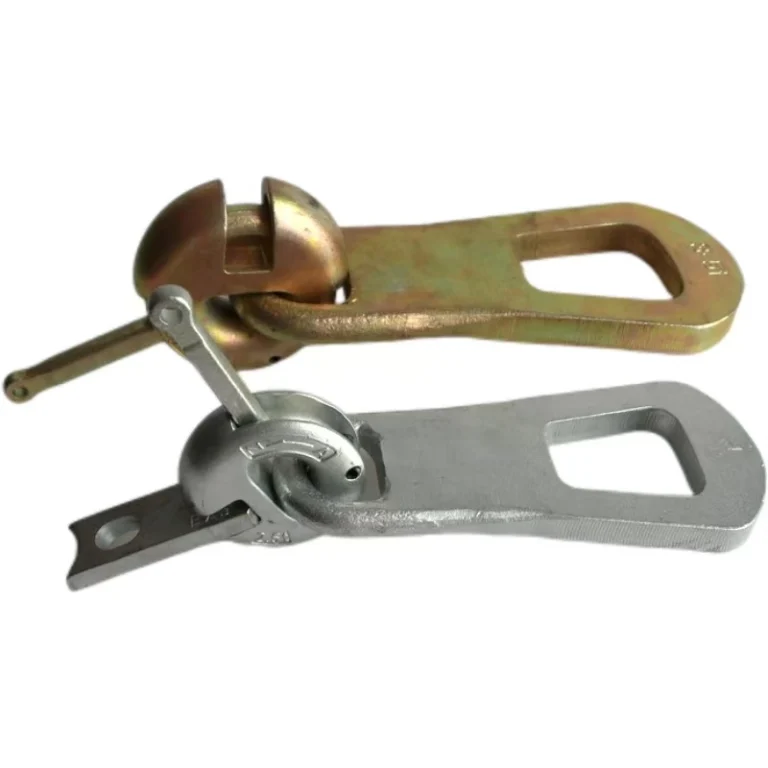
BaoQi is an established manufacturer producing forged and cast industrial components used across construction, machinery, heavy hardware systems, and precast handling equipment sectors. Their approach emphasizes traceable quality control from raw steel selection through final proof load certification—exactly what professionals expect from a responsible lifting clutch manufacturer.
Other Precast Concrete Accessories You Might Want to Know
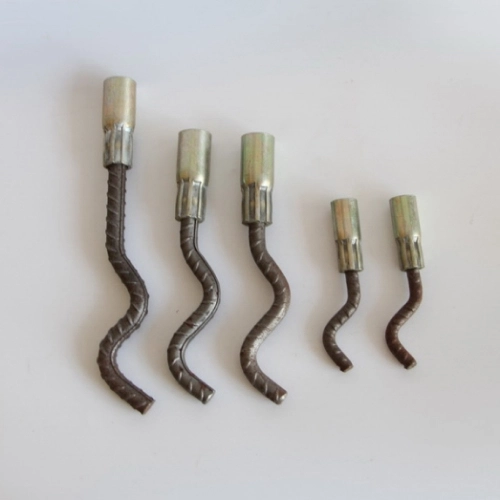
Besides clutches themselves, related accessories include embedded anchors, spreader plates, socket inserts, rebar loops, and transport rings—all designed to integrate seamlessly into precast structures while maintaining consistent safety standards.
FAQs
Q: What does WLL mean?
WLL stands for Working Load Limit—the maximum safe load a device can handle under normal conditions.
Q: Why test at 2× WLL during factory proof testing?
Testing at twice the rated capacity ensures built-in safety margins against unexpected overloads in real applications.
Q: How often should lifting clutches be inspected?
A brief pre-use check should occur daily or before each lift; full proof testing is recommended annually.
Q: What materials are commonly used for concrete lifting anchors?
High-strength alloy steels with controlled carbon content are typical due to their toughness and fatigue resistance.
Q: Can damaged coatings affect performance?
Yes—any break in protective coating may lead to corrosion that weakens structural integrity over time; immediate repair is advised.