Role of Rubber Recess Formers in R Anchor Installation
Functional Characteristics of Rubber Recess Formers
Rubber recess formers play a pivotal role in the successful installation of R anchors in precast concrete elements. One of their key functional traits is elasticity and flexibility. This allows them to accommodate varying anchor geometries—whether it’s utility, spherical head, or spread anchors—ensuring a tight and secure fit throughout the casting process.
Another important feature is their resistance to deformation. During concrete pouring, recess formers are subjected to high pressure and vibrations. Rubber, being inherently durable and resilient, maintains its shape, ensuring consistent cavity dimensions even under stress. This results in a repeatable installation cavity that aligns with the specifications of the anchor.
Additionally, rubber recess formers are preferred for their surface finish friendliness. They create smooth, clean cavities without damaging the surrounding concrete, which is critical for both structural integrity and aesthetics.
Influence on Installation Precision
Rubber recess formers significantly enhance installation precision. Their firm yet adaptable structure helps maintain anchor alignment during casting. This means the anchor remains fixed in its intended orientation, reducing the risk of positional errors caused by shifting or tilting.
Manual adjustments, which are prone to human error, are minimized. The fixed cavity ensures that anchors slot into place as intended, improving overall accuracy and reducing time spent on corrections. As a result, the installed anchor enjoys greater stability within the concrete body—critical for load bearing performance and safety compliance.
Types of Rubber Recess Formers for R Anchors
Spherical Head Anchor Rubber Recess Former
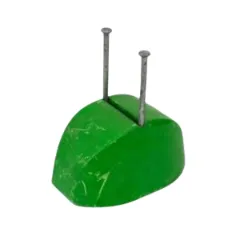
The spherical head anchor rubber recess former is designed to match the round geometry of spherical head anchors, offering an optimal fit that secures the anchor firmly during casting. This design ensures:
- A tight seal that prevents concrete seepage.
- Uniform load distribution around the anchor post installation.
- Quick and damage free removal after curing.
JRRF013 to JRRF320 cover different capacities from 1.3T to 32T with precise diameter and height dimensions.
Utility Anchor Rubber Recess Former
For medium load applications, utility anchor recess formers provide a practical solution. These are often used in residential and commercial precast components where standard lifting requirements apply.
- They help ensure consistent embedment depth.
- Their shape simplifies post demoulding inspection, allowing clear visual confirmation of proper installation.
- The formers are available in various sizes like JRFU444 and JRFU666, which correspond to specific utility anchor types for 3 1/2″ height applications.
Spread Anchor Rubber Recess Former
Spread anchors require a wider cavity due to their base design. Rubber recess formers tailored for these anchors ensure:
- Precise recess geometry for reliable mechanical locking.
- Stability during curing due to snug anchorage.
- Reduced movement or tilt, even under substantial concrete vibration.
This type is ideal for high load or dynamic load scenarios commonly seen in infrastructure projects.
Installation Process Optimization Using Rubber Recess Formers
Preparation Before Concrete Pouring
Before any concrete is poured, it’s crucial to fix the recess former securely to the mold surface. This can be done using standard fasteners or magnetic holders depending on site preference.
- Always verify alignment with anchor layout drawings.
- Double check depth and positioning before continuing with setup.
This step is vital to maintaining positional accuracy and ensures that the anchor performs as expected under load.
Steps During Concrete Casting and Setting
During casting, monitor the recess former for any shifts. High pressure pouring and vibration can cause movement if not properly secured.
- Use controlled vibration techniques that do not distort the recess shape.
- Avoid over vibration in areas close to the formers.
Maintaining shape integrity is essential to ensure proper recess formation.
Demoulding Techniques for Damage Prevention
Once the concrete has set:
- Apply gentle force when removing rubber formers to avoid chipping cavity edges.
- Clean residual concrete immediately from the former’s surface using non abrasive tools.
This protects both the concrete finish and extends the life of reusable rubber formers.
Maintenance and Lifecycle Considerations for Rubber Recess Formers
Cleaning and Storage Guidelines
Post use maintenance is simple but critical:
- Clean using soft brushes or cloths—no metal scrapers.
- Store formers in cool, dry areas away from direct sunlight or heat sources to prevent material degradation.
This helps preserve elasticity and dimensional stability for future use.
Inspection and Replacement Practices
Routine checks should be performed before each reuse:
- Look for cracks, warping, or reduced elasticity.
- If a former no longer holds its shape or size accurately, replace it immediately.
Maintaining these standards ensures consistent cavity quality and long term performance reliability.
Enhancing Project Efficiency with Quality Manufacturing Support
Importance of Consistent Component Standards in Precast Assembly
In precast construction, time equals money. Using rubber recess formers that adhere strictly to component standards speeds up installation cycles and reduces rework.
Accurate formers reduce rework and speed up installation cycles on site. Uniformity across product batches ensures installers know exactly what to expect with every unit.
Integrated Production Capabilities Supporting Custom Requirements
For projects with unique anchor shapes or load demands, OEM/ODM customization becomes essential.
Manufacturers like BaoQi offer OEM/ODM customization based on project specific anchor systems. BaoQi’s ISO‑9001 certified processes ensure dimensional precision and material consistency, making them a reliable partner for contractors working across diverse precast applications.
Application Scenarios Benefiting from Reliable Metal Component Partners
From modular buildings to disaster relief shelters:
In complex precast installations, BaoQi’s rubber formers contribute to reduced labor time. BaoQi supports large scale construction projects with stable supply chains and flexible production capacity.
This makes them ideal for tight schedule projects where delays aren’t an option.
Rubber recess formers are more than just accessories—they’re essential tools that streamline installation, improve accuracy, and ensure long term performance of R anchors in precast systems. Whether you’re working on infrastructure, commercial buildings, or modular units, choosing the right rubber recess former can make a measurable difference on site.
FAQ
Q: What are rubber recess formers used for in R anchor installation?
Rubber recess formers create precise cavities in precast concrete, securing R anchors during casting for accurate positioning and easy lifting clutch engagement.
Q: How do rubber recess formers improve installation accuracy?
Their elasticity and resistance to deformation maintain anchor alignment under pressure and vibration, minimizing shifts, tilting, and manual adjustments for greater precision and stability.
Q: What types of rubber recess formers are available for R anchors?
Common types include spherical head (e.g., JRRF013 to JRRF320 for 1.3T-32T), utility (e.g., JRFU444, JRFU666), and spread anchor formers, each tailored to specific anchor geometries and load requirements.
Q: What are the key functional characteristics of rubber recess formers?
They offer elasticity for tight fits, deformation resistance during pouring, and surface-friendly finishes that produce smooth, clean cavities without damaging concrete.
Q: How should rubber recess formers be maintained for reuse?
Clean with soft brushes (no abrasives), store in cool, dry areas away from sunlight, and inspect regularly for cracks or warping before reuse to ensure consistent performance.