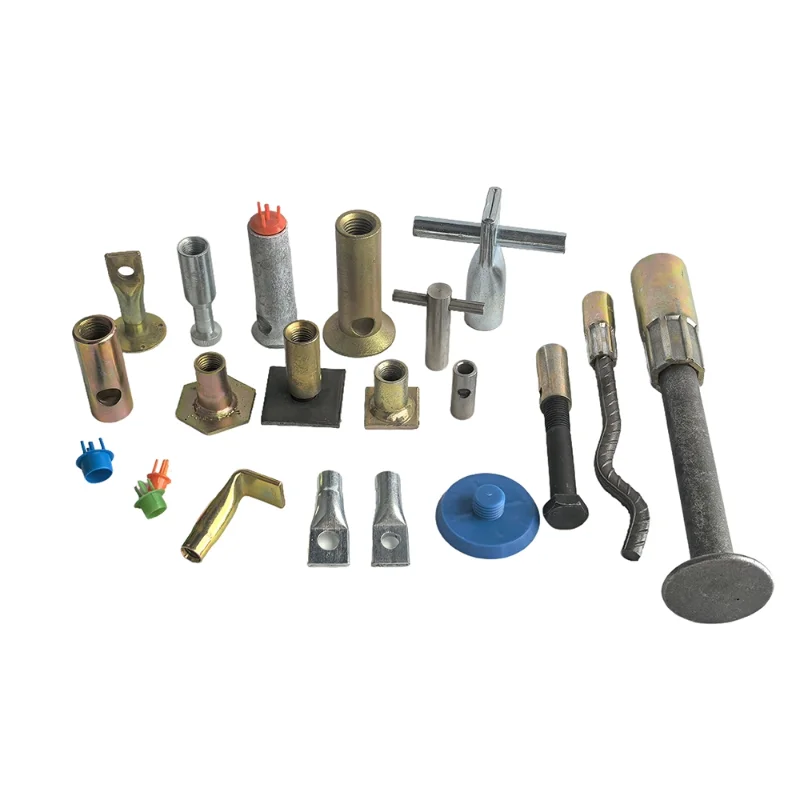
Before selecting lifting anchors and systems in precast construction, understanding the geometry, weight, and environmental factors of the concrete elements is essential. Matching anchors and clutches correctly ensures not only safety during transport but also structural integrity during installation and beyond.
Let’s walk through how different combinations serve specific roles across various applications and how you can make the right choice for your project.
Lifting Anchor and Lifting Clutch: Secure Handling for Heavy Precast Elements
Function of the Lifting Anchor
A lifting anchor serves as the embedded connection point within a concrete element. Its core job is to transfer loads from lifting equipment into the concrete body itself. These anchors are set in place during casting and are precisely positioned to withstand both vertical and angled forces under tension or compression.
Lifting anchors like JDHLA025085 (2.5Tx85) or JDHLA050240 (5Tx240) are typical examples used in these applications.
Role of the Lifting Clutch
The lifting clutch connects directly to the exposed head of the embedded anchor. Its purpose is to facilitate quick attachment and detachment during handling while maintaining a secure grip when under load. Models such as JLC025 (2.5T) or JLC050 (5T) are standard clutches compatible with spherical head anchors.
Installation Process
- Recess formers like JRRF025 are used to accurately position the anchor head in the mold.
- Once concrete is poured and cured, the recess former is removed, exposing the anchor.
- The clutch is then attached directly before the lift begins.
Combination Advantages
- High load-bearing capacity up to 32 tons with models like JLA320.
- Consistent performance even under repeated lifts.
- Simplifies onsite crane operations, especially with heavy columns or structural walls.
Typical Applications
- Beams, columns, and wall panels in commercial buildings.
- Infrastructure units like bridge segments or retaining walls where structural integrity is non-negotiable.
Spread Anchor and Lifting Ring Clutch: Stability for Thin or Wide Panels
Features of Spread Anchors
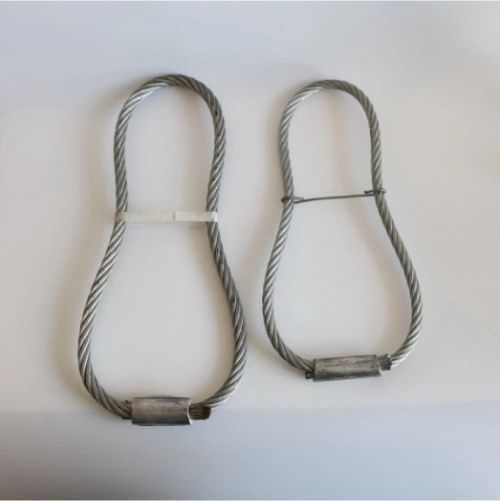
Spread anchors offer wide anchorage areas that distribute load more evenly, a key advantage for thin or broad concrete elements where stress concentration can lead to cracking. The JSA050240 spread anchor (5.0-240) is a representative example.
Function of the Lifting Ring Clutch
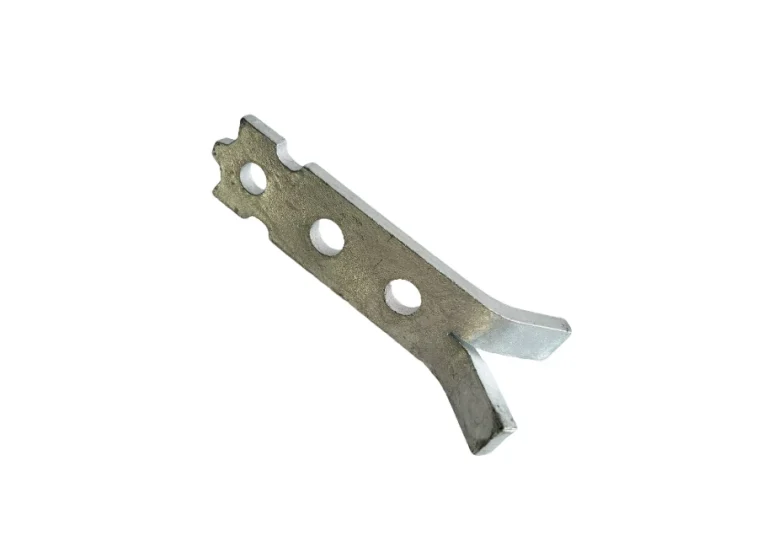
The ring clutch is designed for flexibility—it can rotate, aligning naturally with lifting gear without requiring anchor repositioning. It also offers quick locking action and easy manual handling.
Installation Process
- Formwork removal exposes anchor heads.
- Recess former detachment gives access for clutch placement.
- The ring clutch locks into place with minimal effort.
Combination Advantages
- No need for additional lifting frames for flat panels.
- Supports tilting of slabs directly from casting tables.
Practical Applications
- Architectural façade panels, stair landings, floor slabs.
- Ideal where visual appearance and structural delicacy intersect.

Wavy Tail Anchor and Lifting Point: Strength Under Dynamic Loads
Features of Wavy Tail Anchors
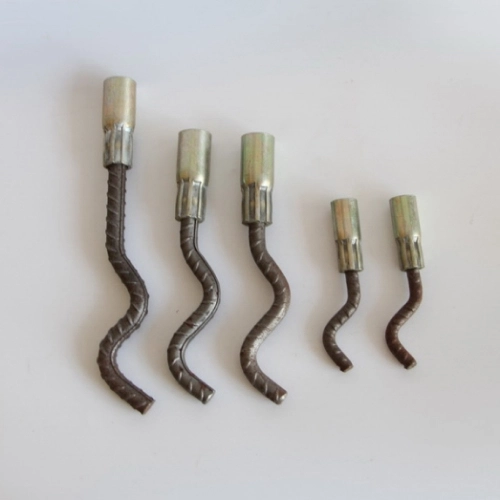
Wavy tail anchors are forged with unique tail profiles that deliver superior bond strength within the concrete matrix. This configuration excels in dynamic or multi-directional loading conditions.
Examples include JWFS30300 (RD30×300) or JWFS52620 (RD52×620), capable of handling up to 12,500 kg safely.
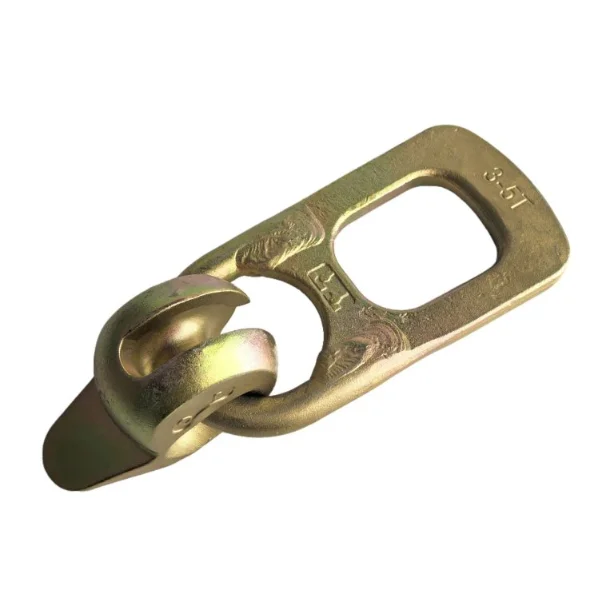
Function of a Lifting Point
Lifting points serve as robust fixed interfaces that connect hoists or crane hooks to the internal anchoring system. They hold alignment even during rotation-heavy lifts.
Installation Process
- Surface inspection determines optimal lifting alignment.
- Points are securely connected to embedded anchors.
- Load application is gradual, ensuring balanced stress distribution.
Combined Advantages
- Exceptional pull-out resistance under shifting loads.
- Excellent fit for heavy elements requiring rotational control.
Applications
- Tunnel lining segments, wind turbine foundations, machine base blocks.
Choosing the Right Combination: Safety, Efficiency, and Cost Optimization
To simplify selection, here’s a comparison table:
| Criteria | Best Pairing Combination | Notes |
| Vertical/Heavy Lift | Lifting Anchor + Lifting Clutch | For columns/beams |
| Wide or Thin Panels | Spread Anchor + Ring Clutch | For facades/floor slabs |
| Dynamic/Multi-Angle Loads | Wavy Tail + Lifting Point | For tunnels/foundations |
| Quick Onsite Operation | Lifting Anchor + Clutch | Fast hook-up at job site |
| Minimal Edge Risk | Spread Anchor + Ring Clutch | Reduced stress near corners |
Also consider:
- Indoor vs outdoor exposure: galvanized parts resist corrosion better.
- Temperature shifts: choose materials that won’t expand/contract excessively.
- Budget: opt for easy-to-install systems that cut down labor time.
Manufacturing Expertise Supporting System Performance
BaoQi was established in 2010, specializing in the production and export of various forging, casting, punching parts in Qingdao, China. They’ve since grown into an international player offering reliable metal supply and precast concrete accessories.
Advanced Manufacturing Capabilities
BaoQi’s plants are certified to the international ISO-9001 quality system standard and our products are carefully tested to meet the strict quality requirements and industry standards prior to each shipment. This means every anchor-clutch pair meets tight tolerances—critical for compatibility and safety.
Comprehensive Product Line
From high-load anchors to multi-angle lifting points, BaoQi offers a full range of parts tailored for diverse concrete geometries. Whether it’s a standard beam or a uniquely shaped slab, you’ll find fitting solutions.
Compliance with Global Standards
All BaoQi parts meet international safety codes relevant to construction lifting operations. That’s one less thing to worry about during permitting or inspection phases.
Tailored Project Solutions
Need something custom? For projects requiring non-standard configurations due to geometry or load complexity, BaoQi provides custom engineering support backed by manufacturing agility.
Other Precast Concrete Accessories You Might Want to Know
Looking beyond lifting systems?
- Edge Protection Systems help keep corners intact during transport.
- Spacer Systems ensure rebar is positioned perfectly within molds.
These smaller details add up to significant quality gains over time.
FAQs
Q: What’s the safest anchor type for thin wall panels?
Spread anchors paired with ring clutches help distribute stress evenly across fragile sections.
Q: Can I reuse lifting clutches across different projects?
Yes, provided they match anchor sizes and remain within load ratings.
Q: Are BaoQi products compliant with European lifting standards?
All BaoQi parts meet international safety codes relevant to construction lifting operations.
Q: Do I need special training to install these systems?
Basic familiarity with precast handling procedures is recommended, but installation is straightforward using provided recess formers and guides.
Q: How do I determine which anchor-clutch combination suits my project?
Consider geometry, load direction, thickness, environment, and budget—or contact BaoQi’s engineering team for guidance.